|
|
| Vineyard Views |
|
|
Emtu Estate Winery
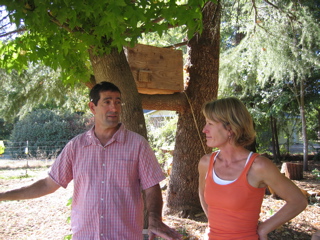 Lori and I met John and Chris Masono n a crisp Fall day in the Russian River Valley. What fascinating people! Not just
for their vineyard/winery, and how they consider nature and the environment in everything they do, but for how they live and have lived
their lives outside of grapes. Dedicated to the human community, in the largest sense you can think of, is the best way to
describe them. We wandered their vineyard, and sat and talked with them for a few hours. Here are the highlights.
Lori and I met John and Chris Masono n a crisp Fall day in the Russian River Valley. What fascinating people! Not just
for their vineyard/winery, and how they consider nature and the environment in everything they do, but for how they live and have lived
their lives outside of grapes. Dedicated to the human community, in the largest sense you can think of, is the best way to
describe them. We wandered their vineyard, and sat and talked with them for a few hours. Here are the highlights.
Wine-Food pairing with Emtu wines
ViciVino.com: How did you come up with your name Emtu?
John Mason: Chris’s maiden name was Mason and her ancestry is both French and Lithuanian, and my
family’s name is Mason too and my ancestry is English and Italian. When we got married and started our venture we
thought of calling it 2M’s or something like that. We found in trying to get our domain name all the combinations
of M’s with 2’s in it were all taken. So we decided to phonetically spell it out. EM “M” TU “TWO”.
VV: What are your backgrounds?
Chris Mason: I was a clinical nutritionist in public health. What is very important to me is
food and farming. John was a paramedic and firefighter for over 20 years in Berkeley and is at least the third
generation winemaker in his family.
VV: What inspired you to get into the wine business?
JM: I grew up in Northern San Diego County on a large avocado orchard that I helped to harvest
every year. The model growing up was that you can grow things and eat them. However, my mother was the worst
cook ever! And my memory of wine was the gallon of Carlo Rossi my parents always had in the dining room, which
would last about a month. They would have a half a glass of wine every night with dinner. My grandparents had
a garden in New Jersey, as they were immigrants from Italy. The influence of eating something that you grew
yourself is very satisfying and brings good memories from my childhood. Having been a firefighter gave me the
mentality of not finishing until the job is done. I use that same philosophy with my land and wine.
CM: My father was a physician and my mother a nurse. I grew up with them believing in drugs
and surgeries, nothing holistic. I adopted a real intuitive goal of optimal health. I feel strongly that everyone
should be able to afford food and good wine. I want the plants to be healthy, we need to be healthy, from a humanity
standpoint, which includes growing crops and not just going to Costco to buy the food we need. Do something that is
going to enhance your life. John has the passion for the wines and I’m a worker bee especially in the garden.
 VV: What is Emtu’s focus?
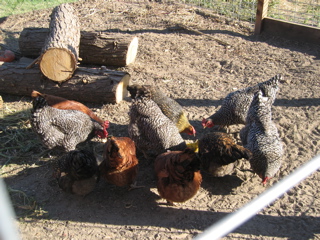
CM: Besides our focus on our great wines and our beautiful vineyard, our main focus is on the cycle
on farming. We farm organically and make sure that the land is not stripped of its ecology. Also, we make it very
accessible. We want to show and teach people that you can have a life that is earth-based. You can come here and
experience everything that a farming winery has to offer.
VV: How do you make the farming easier with having both the grapes and the vegetables growing?
CM: First of all we don’t create a situation where the ecology gets cleaned out. We are certified
organic so we have an ecosystem that exists to begin with. We plant a cover crop that pretty much gives back compost
and nitrogen of green fertilizer to the vines. We don’t use chemicals that also sterilize the insect population.
We use a very low dose of food grain mineral oil because we manage our canopy, which allows the natural air and
sunlight to protect from mildew and other growths. We have found a balance between predators and pray, which
lets nutrients rebuild while still letting the insects keep a rhythm going. If we had no gophers we wouldn’t have
any hawks or owls. We need to tolerate a few predators because they are important to the whole farm.
Sipping time #1: It’s hard to do a winemaker interview without trying some wine. First up is the 2007 Merlot made
Rosé style – about 40 cases made. It’s fermented completely dry which means no sugar is left in the wine and it has
12% alcohol. A nice wine to drink at a picnic in the summer or to eat with a light barbecue dish.
VV: When was your first vintage?
JM: 2005 was our first vintage. Our first bottling was Spring 2007.
VV: What is your main goal when you are making your wine?
JM: Our main goal is to make a food friendly wine. With having around 330 plants, we make our
wine for the public, who likes to be able to touch, feel and taste. We make our wines to be drunk now, and to be
perfect with whatever dish you are making. We try and make our vineyard a tactile learning experience for all.
We have had strangers come and help us pick grapes during harvest, we have had school kids come and blend the grape
juice before it ferments and they go home with a nice bottle of grape juice that they blended.
VV: How many acres do you have?
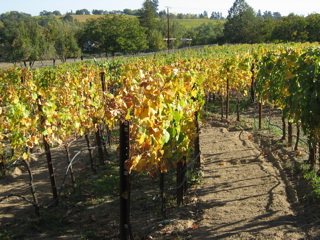
JM: We have 3 acres total and two of them are planted. The majority of that is Pinot Noir plus
a little bit of Merlot.
VV: What was here when you bought the property?
JM: On one side there was an old pasture and the other side were neglected apple trees. So we
planted in two phases starting in 1999 and the rest in 2002. The vineyards then are different ages, and due to
the sun exposure they ripen at different times, but we pick it all at the same time. One side tends to be higher
in sugar and the other side is a little higher in acid. Our style is more Burgundian rather than California style
in making the Pinot Noir. We have two clones that are planted together which tend to give our wines a bit more complexity.
 VV: Why did you buy here and why did you plant Pinot grapes?
JM: I bought this property before I met Chris. There were a number of changes going on and I
was looking for the perfect postage stamp lot with a California bungalow that was low maintenance. Once I found
this perfect spot then it was a matter of doing an agricultural enterprise. I thought of growing berries, but it
made better sense to grow grapes. This area has perfect weather and soil for Pinot Noir so that is what I planted.
I took the course offered at the local Santa Rosa Junior College on vineyard management and over the years have taken
a few classes at UC Davis plus a few at Sonoma State.
Sipping time #2: 2006 Pinot Noir, made 280 cases. This wine spends 18 months in third year French oak, so we get
the right amount of extraction from the oak for our wines. We use the barrels for one year then we give them to
someone else or put them in the garden. Once the wine is bottled we don’t release it for another six months. A big
coup for Emtu winery was getting this wine picked up by Chez Panisse restaurant in Berkeley. Having this happen took
a big check off of our “dream list”.
VV: Where is the actual wine making facility?
JM: We do some of it here and we do some of it at Moshin Vineyards. We are not allowed to make
over 200 gallons of wine per year here. So we always make a barrel of Pinot, a Rosé, a Chardonnay and this year a
Merlot specifically for a fundraiser, here at the property. We do not plan on growing any larger as we like the
small personal size that we can handle ourselves. It’s reminds us of a vineyard we saw while we were traveling in Italy.
VV: Can winemakers such as yourselves make money on a vineyard your size?
JM: Yes. If you have between 2-5 acres, are a savvy marketer, have a loyal clientele, do a lot of
the work yourselves, and do direct sales for the bulk of your wines. With a winery you are usually carrying two years
of expenses before the money starts to come in. We want to enjoy our life and we know how to work hard and how to play hard.
VV: Tell us about the Labyrinth Foundation?
JM: In 1999 I was looking for something different. I had planted my vineyard and the U.S. had
intervened in Kosovo. I packed up a box of hammers and nails and thought I would go over there and help them to
rebuild. I took a year sabbatical from the fire department. Doing that work made me realize that I wanted to keep
working to help people and communities after natural disasters or for people whose community is depressed. We were
working through a number of different agencies. After doing this for a number of years, we decided to develop our
own non-profit foundation ourselves. We have been to India; after their earthquake I went to help construct a
children’s hospital. In 2002 we went to the Afghan-Pakistan border where there was a lot of bombing and refugees.
In 2003 we went to Cameroon, Africa working in construction and Chris worked with them using her Nutrition and HIV
specialties. In 2005 I went back to Pakistan after their earthquake. Recently we went to Guatemala where we worked
with doctors in rural clinics.
Sipping time: 2005 Pinot Noir which has been in the bottle since 2007. [VV note: They gave us a second glass
so we could compare the 2005 and the 2006 Pinot side by side. They were quite different. Both wines were made
exactly the same, but the difference between the vintages was very noticeable. All of their wine is unfiltered
and unfined. It’s made with a gravity style and once it is in the barrel it is racked only twice during the 18 months.]
VV: Tell us about your label?
JM: The logo is a replication of a labyrinth. There is a section of our vineyard that is planted
in concentric circles with different entry points. After a few years of working the vineyard as a labyrinth we found
it too hard to farm the grapes so we have modified it a little bit and put an additional exit to make it easier. There
is still no direct route to the center without going around to it. The light and wind exposure in the labyrinth is
different and harvest is unique.
VV: Why did you go with the labyrinth design?
JM: After planting 30 rows in straight lines I thought to plant something that was different and
not as quite linear. So I started laying out circles instead.
CM: We were on a date walking through Anadel State Park which is in East Sonoma county. We saw a
labyrinth there and at that time it represented both of our lives, making changes and finding a new way to walk or go
forward. The point of a labyrinth is that you go into one with a question and ideally by the time you get to the
middle you should have your answer. Then you walk out with the answer and you fortify it. It’s a way of problem solving.
VV: What are some of your favorite food pairings with your wines?
JM: Carnitas tacos with the Rosé. In the summer time we cook 70% of our meals on the grill.
Anything coming off the grill is going to go with our Pinot. We make a blackberry peppercorn reduction sauce that
you when you put over pork loin chops, well, need I say more!
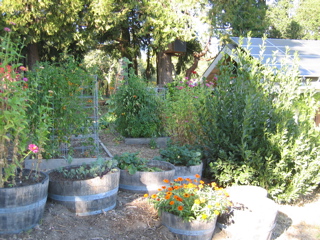 CM: With the Pinot we love anything earthy. Lamb, which is a classic, and mushrooms. I love
making my turkey meatloaf, which has dried tomatoes that I have dried from my tomatoes in the garden, mushrooms,
a chipotle sauce and lots of herbs and onions. We have beehives and I love blue cheese, which with the honey is
quite decadent and is also perfect with our Pinot. Making a pesto out of our spinach, basil and cilantro and
putting it over some fresh grilled salmon or over pasta is another great treat.
CM: With the Pinot we love anything earthy. Lamb, which is a classic, and mushrooms. I love
making my turkey meatloaf, which has dried tomatoes that I have dried from my tomatoes in the garden, mushrooms,
a chipotle sauce and lots of herbs and onions. We have beehives and I love blue cheese, which with the honey is
quite decadent and is also perfect with our Pinot. Making a pesto out of our spinach, basil and cilantro and
putting it over some fresh grilled salmon or over pasta is another great treat.
VV: What do you want everyone to remember or know about Emtu?
JM: Our tagline is “Dedicated to organic farming, great wine and improving lives and
communities worldwide”. Organic farming means trying to contribute something rather than take. Trying to
recycle resources rather than deplete. Great wine means going through everything that it takes to certify
and maintain an organic certification for everything that is grown within our property lines. We believe
in that as a farming model. I think that it produces better grapes, and that produces better wine.
Emtu Estate Winery
6111 Van Keppel Rd.
Forestville, CA 95436
(707) 887-1239
Emtu Estate Winery
|
|
|